雨中的女人
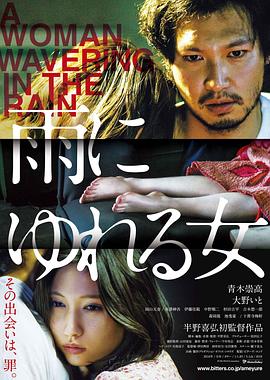
半野喜弘の初監督映画『雨にゆれる女』が、2016年に公開される。  同作は、エレクトロニックミュージックやオーケストラ作品に加え、ホウ・シャオシェン監督、ジャ・ジャンクー監督らの映画音楽など、国内外で幅広い作品を手掛ける音楽家・半野喜弘が、自身のオリジナル脚本を映画化した作品。「飯田健次」という別名を名乗り、毎朝眼鏡と補聴器で変装してから職場に向かう孤独な男・則夫が、秘密を抱えた女を家に預かったことをきっかけに、次第に彼女に惹かれていき、「健次」でいられなくなっていく、というストーリーだ。  過去に犯した過ちから別人として生活し、他人との関わりを避けて生きる主人公の則夫を演じるのは、映画『るろうに剣心』シリーズの相楽左之助役などで知られる青木崇高。闇を抱え、共に自分自身を語らない則夫と惹かれ合う謎の女役を、出演作『天の茶助』『忘れ雪』などの公開を控える大野いとが演じる。  半野は、映画監督に挑戦した理由について「音楽というのはとても抽象的な芸術です。より人間そのもの、物語を描きたいと思った時、それが映画でした」とコメント。また、青木と大野の起用理由については、「誰も知らない青木崇高、誰も知らない大野いとを描けると思ったからです。青木くんは豪快なようで非常に繊細で緻密な人物。大野さんには蝶が羽化する直前のような危うさと強さを感じます。この映画の中で、きっと未だ見ぬ2人を観てもらえるはずです」と語っている。  なお、同作ではクラウドファンディングプラットフォーム「Motion Gallery」で4月30日まで製作費の一部を募るプロジェクトを実施中。支援のリターンには、映画完成時の打ち上げへの招待や、半野主催の音楽イベントへの招待、撮影小道具のプレゼントなどが用意されている。
难忘的夏天
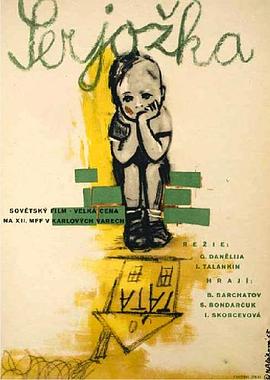
1960年捷克卡罗维发利国际电影节最佳导演水晶球奖。  Originally titled Seryozha, the Russian A Summer to Remember was co-adapted by Vera Panova from her own short story. War and Peace director Sergei Bondarchuk plays the new stepfather of young Seryozha (Borya Barkhatov). So close do the stepfather and the boy become in the months following their meeting that, when time comes for the boy to move on in life, he refuses to leave his new dad's side. Their summer idyll takes place on a Soviet collective farm, managed by Bondarchuk and depicted by novice filmmakers Georgiy Daneliya and Igor Talankin in the most glowing and apolitical of terms. Though there isn't much to the plot, the film admirably succeeds as a sort of cinematic tone poem.  From All Movie Guide Russian filmmaker Georgi Daneliya ranks among his country's most popular directors of satirical comedies. The Georgia-born Daneliya comes from a distinguished family of film performers; his grandmother, Veriko Andzhaparidze, was a famed Georgian silent film actress, his cousin, Sofiko Chiaureli, is also a major actress, and his mother, Meri Andzhaparidze, spent more than a decade at Mosfilm Studios. However, he first chose to train as an architect (perhaps out of respect for his father, an engineer). Following his graduation in 1955, Daneliya worked only briefly in that field when he decided he'd rather be in films, enrolling in Mosfilm Studios' Directors' Courses in 1958. In 1960, Daneliya co-directed SeryozhaA Summer to Remember with Igor Talankin. Two years later, he made his solo directorial debut, Put K PrichaluThe Way to the Wharf (1962). His 1969 comedy Ne Goryuy!Don't Worry! successfully blended humor and melancholy, a device that would become Daneliya's trademark. In addition to directing, Daneliya co-authors the scripts for his films and occasionally works on screenplays for other directors. Daneliya has won numerous national and international awards for his work. In 1964, his Ya Shagayu po MoskveI Walk Around Moscow received an honorable mention at the Cannes Film Festival, while in 1975 Afonya received a special award at the All Union Festival, a major U.S.S.R. event. Daneliya's biggest hit in the U.S.S.R., Mimino (1977), earned the special prize at the Moscow International Film Festival and the U.S.S.R. State Prize. In 1991, Daneliya earned the Nika Award (the Russian equivalent to an Oscar) for Best Screenplay for Pasport (1990).

难以置信的事实
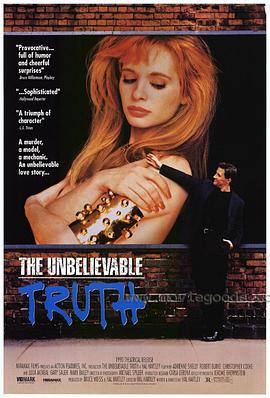
Fraught with over obvious symbolism, Hartley's early feature is nonetheless a joy to watch. Hal here shows us his uncanny ability to cast his characters perfectly came early in his career.  Adrienne Shelley is a near perfect foil to herself, equal parts annoying teen burgeoning in her sexuality (though using sex for several years); obsessed with doom and inspired by idealism gone wrong she is deceptively – and simultaneously – complex and simple. Her Audrey inspires so many levels of symbolism it is almost embarrassingly rich (e.g., her modeling career beginning with photos of her foot – culminating her doing nude (but unseen) work; Manhattan move; Europe trip; her stealing, then sleeping with the mechanics wrench, etc.)  As Josh, Robert Burke gives an absolutely masterful performance. A reformed prisonerpenitent he returns to his home town to face down past demons, accept his lot and begin a new life. Dressed in black, and repeatedly mistaken for a priest, he corrects everyone (I'm a mechanic), yet the symbolism is rich he abstains from alcohol, he practices celibacy (is, in fact a virgin), and seemingly has taken on vows of poverty, and humility as well. The humility seems hardest to swallow seeming, at times, almost false, a pretense. Yet, as we learn more of Josh we see genuineness in his modesty, that his humility is indeed earnest and believable. What seems ironic is the character is fairly forthright in his simplicity, yet so richly drawn it becomes the viewer who wants to make him out as more than what he actually is. A fascinatingly written character, perfectly played.  The scene between Josh and Jane (a wonderful, young Edie Falco . . . You need a woman not a girl) is hilarious . . . real. But Hartley can't leave it as such and his trick, having the actors repeat the dialogue over-and-over becomes frustratingly arty and annoying . . . until again it becomes hilarious. What a terrific sense of bizarre reality this lends the film (like kids in a perpetual am notare too argument).  Hartley's weaves all of a small neighborhood's idiosyncrasies into a tapestry of seeming stereotypes but which delves far beneath the surface, the catalyst being that everyone believes they know what the unbelievable truth of the title is, yet no two people can agree (including our hero) on what exactly that truth is. A wonderful little movie with some big ideas.
*
*